

Why in news?
Researchers at the University of Illinois have highlighted three studies seeking to explain hypermobile Ehlers-Danlos syndrome. Their September announcement brought together findings on symptom patterns, persistent sleepiness and differences in hormone-related compounds. Ehlers-Danlos syndromes are inherited conditions affecting connective tissue, which supports joints, skin and other structures. The hypermobile type can involve pain, unstable joints and symptoms across several body systems, yet its underlying causes remain incompletely understood. The studies offer possible routes towards better classification and care. They do not establish a new diagnostic blood test, prove that hormones cause the disorder or demonstrate that hormone treatment will help patients.
Why one tissue problem can affect several organs
Connective tissue provides support and organisation throughout the body. Collagen is one of its important structural proteins. Different Ehlers-Danlos syndromes involve changes affecting collagen or other components involved in maintaining tissue. This helps explain why symptoms need not remain confined to a single joint. However, the conditions are not interchangeable: their genetic causes, complications and severity differ, even when some visible features overlap.
The classification recognises 13 types. Hypermobile Ehlers-Danlos syndrome, commonly shortened to hEDS, is the most common. Its causative genetic basis has not been established in the same way as several other types. Diagnosis therefore depends on clinical assessment rather than a single confirmatory laboratory test. Unusually flexible joints alone do not establish hEDS; flexibility can occur without a disorder, and other conditions can also cause joint symptoms.
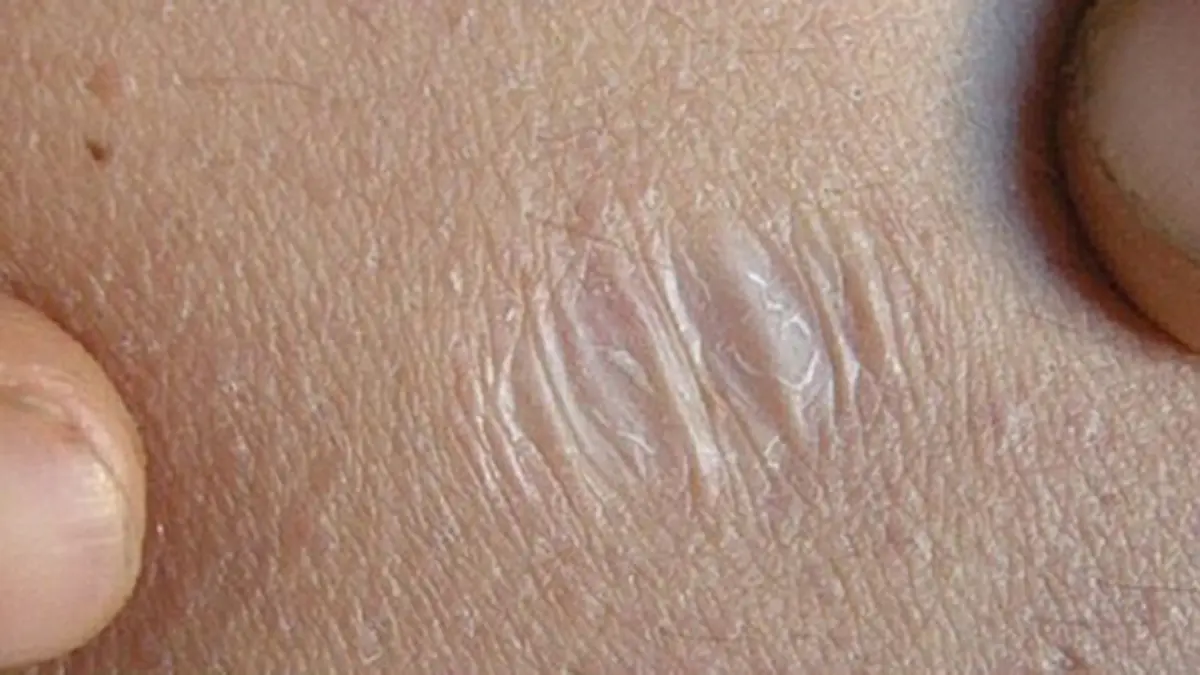
Some types involve marked skin fragility or characteristic scars. Vascular Ehlers-Danlos syndrome carries particular risks involving arteries and internal organs. Those risks should not be automatically assigned to everyone with the hypermobile type. Likewise, inheritance patterns vary across the group. A family history can help assessment, but the meaning of a genetic result depends on the particular condition being investigated.
Looking for patterns within hypermobile disease
The first study, published in PLOS ONE on 11 September, compared symptom profiles in female participants. It included 47 with hEDS, 36 age-matched controls and eight with hypermobility but without chronic pain. The researchers used questionnaires and statistical grouping to investigate whether distinct patterns could be identified. This approach asks whether patients who share a diagnostic label also share the same combination of difficulties.
The analysis identified moderate- and higher-symptom groupings. Such findings may help researchers study a condition that varies substantially between individuals. But this was a cross-sectional comparison: participants were assessed at a particular stage, not followed through every possible transition. Differences between younger and older participants cannot prove that one group will inevitably develop the other's symptoms. That question requires follow-up over time.
Why treating sleep apnoea may not remove every symptom
A separate study examined people with obstructive sleep apnoea alongside hEDS or a hypermobility spectrum disorder. Sleep apnoea involves repeated obstruction of breathing during sleep. Continuous positive airway pressure, usually called CPAP, helps keep the airway open by supplying pressurised air through a mask. The distinction between controlling these breathing interruptions and improving daytime alertness was central to the research.
The retrospective study compared 68 affected patients with 68 matched sleep-apnoea controls. Among patients reassessed after treatment, breathing control and treatment use were similar between groups. Yet daytime sleepiness improved less clearly in the hypermobility group. This suggests that successfully treating one contributor may leave other causes of tiredness unresolved. It does not show that CPAP is useless or that patients should abandon prescribed treatment.
What the hormone study actually found
The third study compared 45 women with hEDS and 45 controls. Researchers examined blood metabolites, which are substances produced or altered during chemical processes in the body. They also studied gene activity in cultured skin cells. Several androgen-sulphate metabolites were lower in the hEDS group, particularly among participants aged 30–49. The pattern was not a uniform reduction across all classes of steroid hormones.
Androgens are hormones present in both women and men. The researchers found changes in processes associated with their production, handling and breakdown. These observations may help explain links between hormonal changes and symptoms, but the direction of the relationship remains uncertain. A chemical difference can be a cause, a consequence or part of a more complex pathway. The study calls for further validation rather than a treatment conclusion.
Developing a diagnostic test would require additional work. A proposed marker must distinguish the condition reliably across different groups and clinical settings. It must also improve decisions beyond existing assessment. Similarly, a treatment would need evidence about benefits, harms and suitable patients. Neither a group-level association nor a plausible biological explanation can replace those tests.
Care remains specific to the person and the type
Current management focuses on the problems an individual experiences and the risks associated with their particular diagnosis. Physiotherapy, occupational support and pain management may form part of care. Certain types require additional monitoring for serious complications. The purpose is to improve function and reduce harm, not to treat all patients as though their symptoms or risks were identical.
The studies are useful partly because they resist a single explanation for every symptom. Joint instability, sleep disturbance and metabolic differences may require different investigations. Better understanding can improve research design even before it produces a new medicine. It can also help explain why a treatment that addresses one documented problem may not resolve a person's entire illness.
Conclusion
The September research update advances questions about how hypermobile Ehlers-Danlos syndrome varies and why symptoms can persist. Its findings support further investigation, not a new cure or a universal hormone explanation. The immediate lesson is to distinguish the different syndromes and evaluate each problem on its evidence. Better classification and carefully tested treatments remain the next steps between promising observations and improved care.