

Why in news?
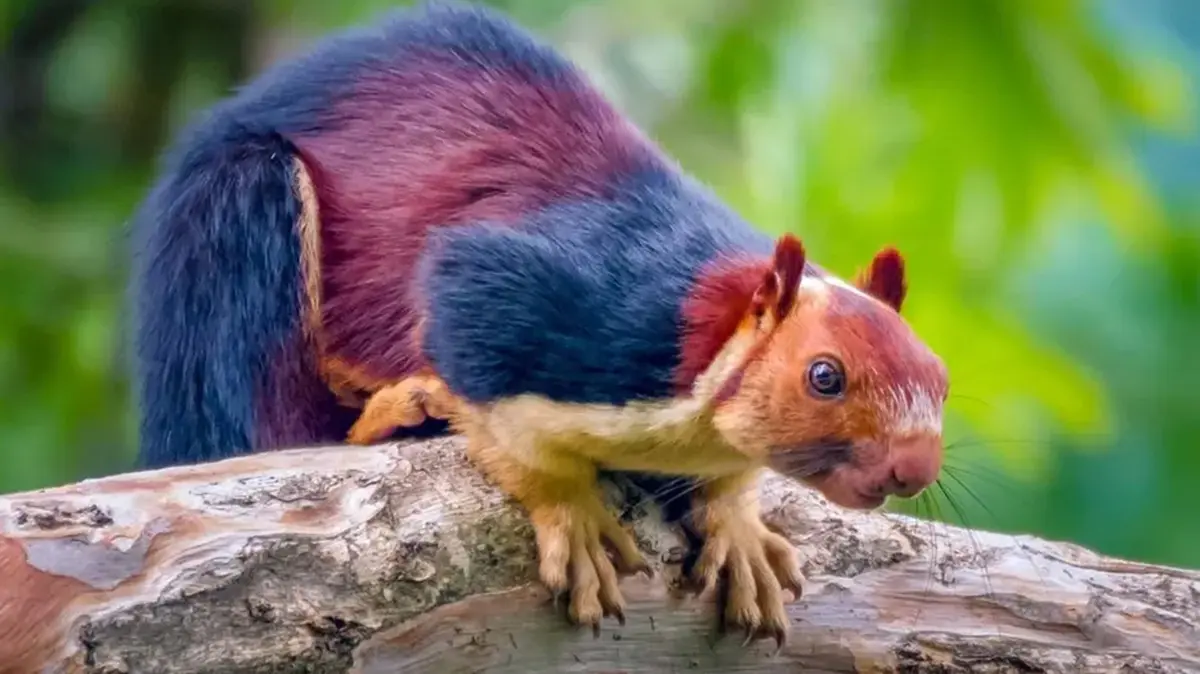
Wildlife photographers and conservationists often highlight the Giant Malabar Squirrel (also called the Indian giant squirrel) for its striking appearance and arboreal lifestyle. The species, endemic to the Western and Eastern Ghats, serves as an indicator of forest health and reminds us of the need to protect tree‑dwelling wildlife.
Background
Scientifically known as Ratufa indica, the giant squirrel is one of the largest arboreal squirrels in the world. It measures between 25 and 50 cm from nose to rump, with a tail that can be just as long or longer. Adults weigh between 1.5 and 2 kilograms. Four recognised subspecies inhabit moist evergreen forests from Gujarat to Tamil Nadu and parts of the Eastern Ghats. The International Union for Conservation of Nature lists the species as of “Least Concern”, but habitat loss poses a growing threat.
Distinctive traits
- Multi‑coloured fur: The squirrel’s upper body sports shades of deep maroon, rust, orange and cream, while the underparts are usually pale. The colours vary across subspecies and help the animal blend into foliage.
- Arboreal acrobatics: Spending most of its life in the upper canopy, it leaps up to six metres between trees. When threatened by predators, the squirrel freezes against a branch or sprawls flat to avoid detection.
- Diet and behaviour: It feeds on fruits, nuts, flowers and occasionally insects. The animal is mainly solitary except during mating, and it builds large spherical nests of twigs and leaves in tall trees.
- Conservation concerns: Deforestation, fragmentation of old‑growth forests and hunting for meat or trophies are major threats. Protecting contiguous forest tracts in the Western Ghats is crucial for the species’ survival.
Conclusion
The Giant Malabar Squirrel embodies the rich wildlife of India’s Ghats. Preserving its habitat not only safeguards a charismatic species but also conserves the complex forest ecosystems on which countless plants and animals depend.