

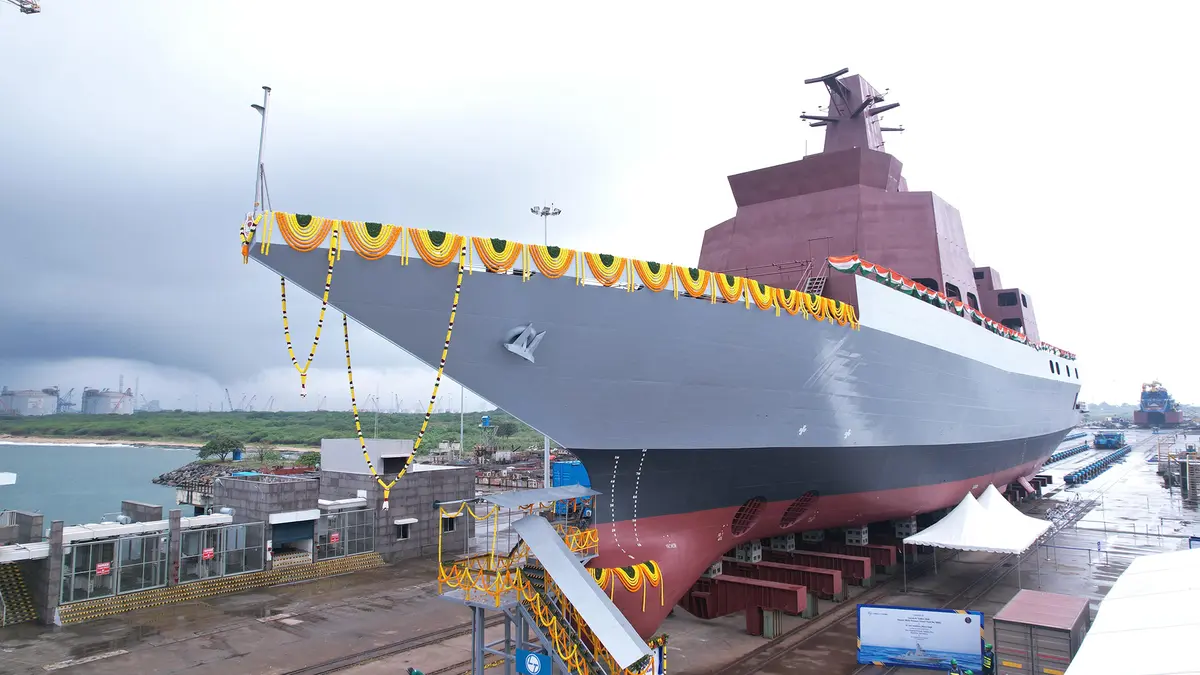
Why in news?
Larsen and Toubro delivered the multi-purpose vessel Samarthak to the Indian Navy on 27 August. The handover occurred at Kattupalli shipyard near Chennai. Samarthak is the first of two vessels ordered for several trial and support roles. Delivery is an important milestone, but it is not naval commissioning.
What was delivered
Samarthak is the first multi-purpose vessel designed and built in India for the Navy. It measures 106 metres in length and 16.8 metres across its beam. The vessel can reach a maximum speed of 15 knots. Official material places its indigenous content above 75 per cent.
The Ministry of Defence signed the two-vessel contract with Larsen and Toubro on 25 March 2022. Samarthak’s keel was laid in March 2023. The vessel was launched in October 2024. Its sister vessel, Utkarsh, forms the second part of the contract.
The delivery release describes the ship as Samarthak, not Indian Naval Ship Samarthak. A delivered vessel still undergoes acceptance, readiness and commissioning processes. The naval prefix is normally used after commissioning. This distinction prevents a construction milestone from being overstated.
Why a multi-purpose vessel is useful
A modern navy must test new weapons, sensors and unmanned systems before operational deployment. A dedicated vessel provides controlled space for those trials. It avoids diverting a frontline warship from its main duties. It also allows engineers to modify equipment more easily.
Samarthak can launch and recover trial targets and autonomous vehicles. It can tow vessels and provide support during equipment development. Official releases also list surveillance, reconnaissance and offshore patrol roles. The platform can assist humanitarian relief when required.
These tasks need open working decks, handling systems and flexible electrical arrangements. A multi-role design can carry changing test equipment across different projects. That flexibility matters as unmanned surface and underwater systems develop. It also supports repeated sea trials under realistic conditions.
Kattupalli and India’s maritime geography
Kattupalli lies on the Bay of Bengal coast north of Chennai in Tamil Nadu. The shipyard has direct access to the sea through the Ennore coastal area. This location supports construction, harbour trials and movement into open waters. Chennai also has a large engineering and maritime-services base.
India faces the Arabian Sea to the west and the Bay of Bengal to the east. The Indian Ocean connects important energy and commercial routes. Reliable naval platforms help monitor these wide approaches. Trial ships support that readiness indirectly by improving systems before fleet use.
Domestic construction also shortens the physical link between designer, yard, user and supplier. Problems found during trials can return quickly to the industrial team. Indian component makers gain practical feedback. The resulting skills can support later warships and commercial vessels.
Self-reliance beyond a percentage
Indigenous content is useful only when local industry controls critical knowledge and long-term support. Hull construction is one part of the capability. Propulsion, electronics, software, sensors and specialised machinery also matter. Maintenance documents and spares must remain available throughout service.
Private yards now complement public shipyards in naval construction. Competition can expand capacity and improve delivery discipline. However, the Navy must keep common quality and safety standards. Regular orders also help yards retain trained workers and specialised vendors.
Samarthak will ultimately be judged through reliable service and useful trials. Timely delivery is only the beginning. Sea acceptance, crew training and equipment integration will test the design. Lessons should feed into the second vessel and later programmes.
Delivery and commissioning are different stages
Delivery transfers an accepted vessel from the builder to the Navy. Commissioning formally places it in naval service after further preparations. The 27 August event was the delivery of Samarthak.
Conclusion
Samarthak gives the Navy a flexible platform for trials, support and limited patrol duties. It also demonstrates growing private shipbuilding capacity. Its real value will appear in safe and reliable operations. Strong domestic maintenance will deepen that value. Commissioning should be reported only when the Navy announces it.