

Why in news?
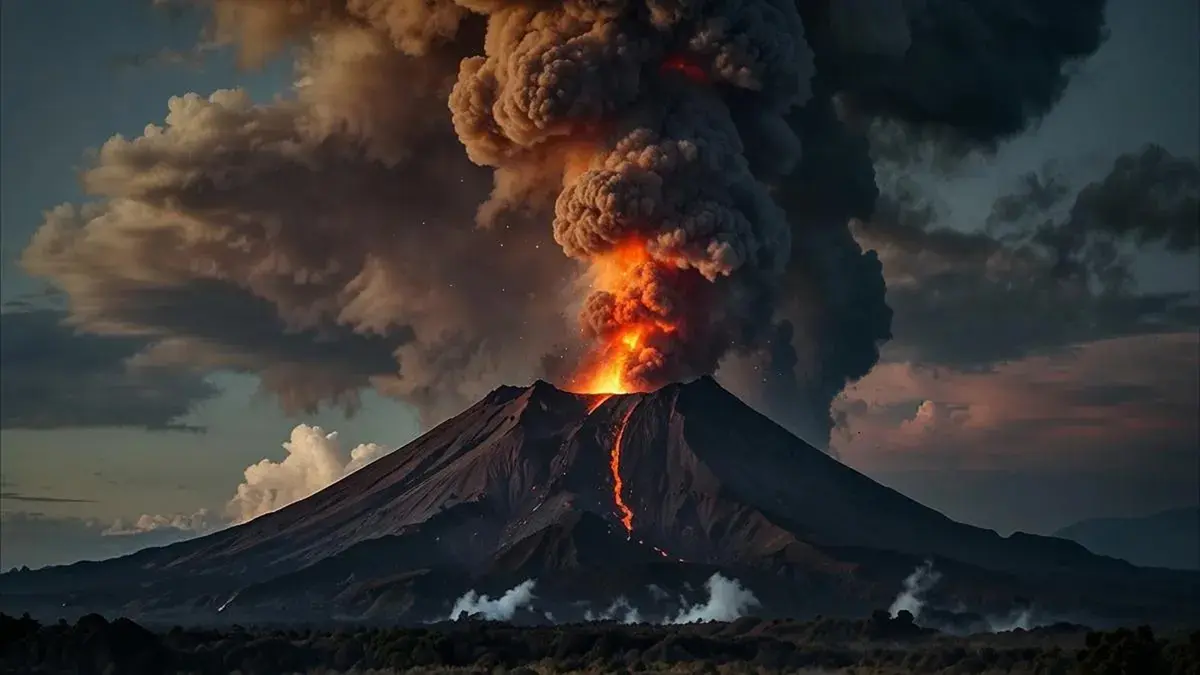
Anak Krakatau erupted again on 6 September 2026 and sent ash into busy Indonesian airspace. Authorities temporarily closed Soekarno-Hatta International Airport and three other airports. Indonesia's Transport Ministry recorded 373 affected flights during the closures that morning. No casualty or evacuation was reported in the official disaster update.
What happened?
Indonesia's aviation authorities issued formal notices after volcanic ash spread across flight routes. Soekarno-Hatta, Jakarta's main airport, closed from mid-morning until early afternoon. Officials also suspended operations at Halim Perdanakusuma, Husein Sastranegara and Radin Inten II airports. Reopening depended upon updated meteorological and ash information.
Associated Press reported that the early eruption lasted about thirty seconds. Another short eruption followed roughly three hours later. The immediate danger zone extended three kilometres from the active crater. Officials asked residents and visitors to remain outside that radius.
Flight disruption reached far beyond the uninhabited volcanic island. Soekarno-Hatta serves the Jakarta metropolitan region and many international routes. Airlines had to hold, divert or cancel flights for safety. Passenger numbers reported during a fast-moving disruption can change as schedules are restored.
Where is Anak Krakatau?
Anak Krakatau lies in the Sunda Strait between Java and Sumatra. Administratively, it forms part of South Lampung Regency in Lampung Province. The strait connects the Java Sea with the eastern Indian Ocean. It is also a heavily used passage beside two densely populated Indonesian islands.
The volcano grew within the caldera left by the catastrophic 1883 Krakatau eruption. Its Indonesian name means “Child of Krakatau.” Repeated eruptions built a new cone above the sea from 1927 onwards. The cone remains one of Indonesia's most closely watched active volcanoes.
Indonesia sits where several tectonic plates interact. Near the Sunda arc, the Indo-Australian Plate descends beneath the Eurasian margin. Melting linked with this subduction feeds a long chain of volcanoes. The same setting also produces frequent earthquakes and tsunami risks.
Why ash stops aircraft
Volcanic ash is made from fine fragments of rock, minerals and volcanic glass. It differs greatly from soft ash produced by ordinary fires. Strong winds can carry these abrasive particles across distant flight paths. A clear sky at an airport does not remove a downwind risk.
Ash can scratch windscreens and damage sensors or moving engine parts. Inside a hot jet engine, particles may melt and coat cooler components. Airflow can then deteriorate and thrust may be lost. Avoidance is therefore safer than attempting flight through uncertain concentrations.
Indonesia's meteorological agency increased continuous monitoring during the event. It used satellite observations and aviation warnings to track the plume. Transport officials coordinated airport decisions through formal Notices to Airmen. These notices communicate temporary hazards and operating restrictions to flight crews.
Local and regional risks
The three-kilometre exclusion zone addressed immediate volcanic hazards near the cone. Falling rocks, hot material and concentrated gases are most dangerous close to the crater. Ash can travel much farther according to wind and eruption height. Separate warnings are therefore needed for communities, ships and aircraft.
Anak Krakatau's geography creates another concern. A major flank collapse in December 2018 displaced seawater and produced a deadly tsunami. That history does not mean every eruption will generate another tsunami. It does justify monitoring changes in the volcano's shape and surrounding sea.
Clear official communication is essential during such events. Old or unrelated eruption videos can spread quickly online. Residents should use information from volcanology, disaster and meteorological agencies. Transport restrictions should also be lifted only after the hazard picture improves.
Conclusion
The eruption showed how a short event can disrupt a major aviation network. Indonesia's temporary closures placed passenger safety before schedule recovery. Continuous ash tracking is necessary because wind can move danger far from the crater. Coastal monitoring remains important due to the volcano's collapse history. Reliable official updates help communities and travellers respond without panic.