

Why in news?
The Supreme Court revisited mining safeguards around Asan Conservation Reserve. It discussed equal treatment for comparable wetland conservation reserves. A 2024 interim order requires prior wildlife clearance within ten kilometres. The direction is a permission requirement, not an automatic mining ban.
Background
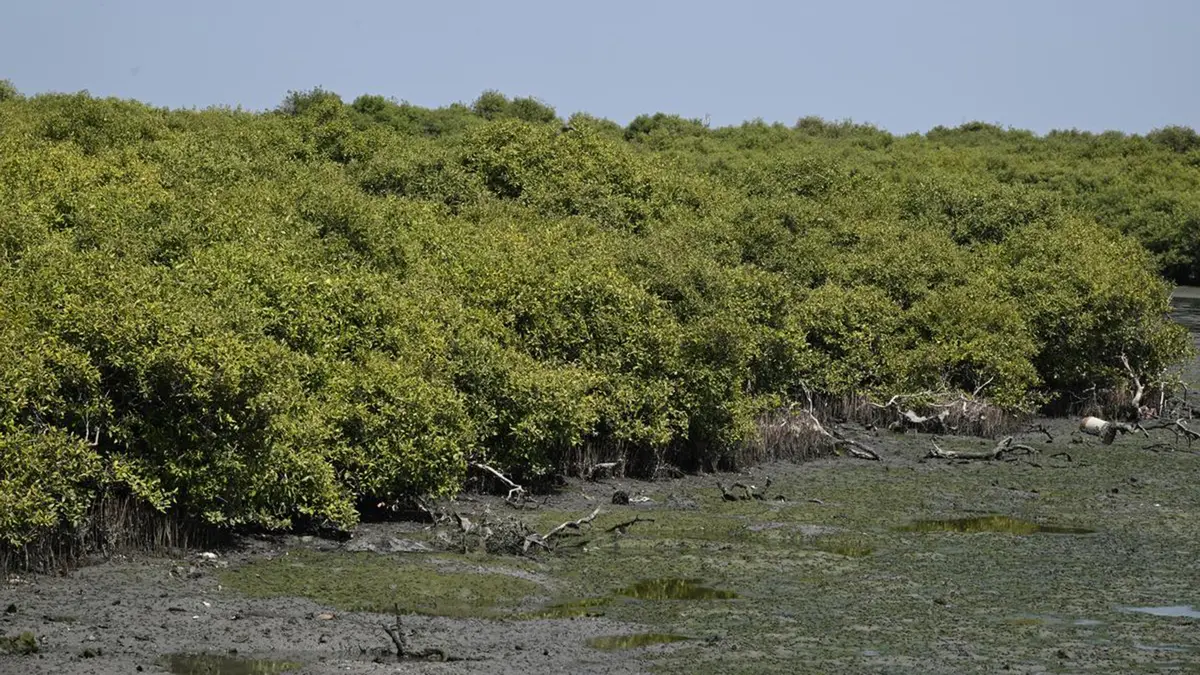
Asan Conservation Reserve lies in Uttarakhand's Dehradun district near the Himachal Pradesh boundary. It covers an Asan River stretch reaching the Yamuna confluence. The wetland combines river, reservoir and seasonally exposed mudflat habitats.
Construction of Asan Barrage dammed the river during 1967, while accumulated sediment helped form bird habitat. Human engineering therefore contributed to the present wetland's ecological character.
India designated Asan as a Ramsar site on 21 July 2020. It became Uttarakhand's first site under that international convention. The listed area covers 444.4 hectares and carries site number 2437.
Official information records about 330 bird species within the broader site. The reserve supports threatened birds, while forty-nine fish species include the endangered golden mahseer.
Two different protection systems
A conservation reserve is an Indian protected-area category under the Wild Life (Protection) Act, 1972. State governments can declare such areas on government land after consulting local communities. These reserves often protect corridors or buffers adjoining larger habitats.
A management committee advises the Chief Wildlife Warden about conservation. Its representatives can include communities and government bodies, encouraging participation while retaining statutory oversight.
Ramsar designation arises under the international Convention on Wetlands, requiring wise use and maintenance of ecological character. It does not itself create the domestic conservation-reserve category.
How the mining case developed
The Uttarakhand High Court examined mining near Asan during 2015. It directed boundary-distance measurement, allowing operators beyond ten kilometres to proceed according to law.
The High Court restricted mining found within ten kilometres, and a later review petition failed during January 2017. The dispute subsequently appeared within the continuing forest-protection proceedings before the Supreme Court.
On 14 February 2024, the Supreme Court issued an interim direction. It barred mining within ten kilometres unless the project proponent obtained specified prior permission. The relevant authorities are the national wildlife standing committee or the Union environment ministry.
The Court cited Asan's Ramsar importance, but its wording did not permanently prohibit every mining activity. A qualifying project could proceed after obtaining the required wildlife-level approval.
The August 2026 hearing
Himachal Pradesh asked whether the Asan direction applied within its territory. The state questioned the reserve's location and the reach of the earlier order. The Court treated location as a factual issue requiring official determination.
During the 4 August hearing, the bench reportedly favoured parity across comparable wetland reserves. It said the earlier protection should not depend upon one state boundary. Oral observations indicated wider application to wetland conservation or community reserves.
The national wildlife standing committee or environment ministry was asked to determine Asan's relevant location. If the reserve extends into Himachal Pradesh, the 2024 direction would operate there. Otherwise, mining decisions would follow the competent authority's applicable legal process.
What the ten-kilometre requirement means
The distance runs from the protected area's boundary, not its central point, making accurate surveys essential. Maps must also identify any boundary crossing into another state.
Within that radius, a proponent must seek permission before mining. Approval is not automatic and should consider habitat, hydrology and cumulative effects. Existing environmental or mining permissions do not necessarily replace wildlife scrutiny.
The direction should not be confused with every eco-sensitive-zone rule. National parks and sanctuaries have a related but distinct regulatory history. Asan's ten-kilometre condition arose from a specific judicial proceeding.
Nor does the hearing create an identical buffer around every Indian Ramsar site. The discussion concerned comparable reserves, while many Ramsar sites possess different domestic legal classifications.
Why mining can affect a wetland
Riverbed extraction changes channels and bank stability, while heavy vehicles create dust and repeated disturbance. Groundwater removal can alter seasonal flow into wet habitats.
Birds depend upon quiet roosts, shallow feeding areas and changing water levels. Fish require connected channels and suitable spawning beds. Damage outside the mapped wetland can therefore affect ecological character inside it.
A ten-kilometre circle remains a screening tool rather than a complete ecological assessment. Project review should examine catchments because impacts vary greatly in range and cumulative effect.
Governance implications
Interstate geography can create enforcement gaps when one activity affects another state's habitat. Common standards deter boundary-shifting, while shared surveys can settle location disputes transparently.
Authorities should publish georeferenced maps and reasoned permission decisions, supported by water, sediment, traffic and bird indicators. Public access helps communities identify violations and evaluate safeguards.
Conservation committees can provide local evidence about seasonal changes. Their role should begin before approval, not after damage occurs. Restoration bonds and enforceable extraction limits may strengthen accountability.
Conclusion
The Asan case strengthens scrutiny around important wetland reserves without declaring an absolute ban. Clear written orders, mapped boundaries and ecological review are now essential.