

Why in news?
A Karnataka institute received a ₹5,50,08,874 Indian Council of Medical Research grant for epidermolysis bullosa. The project lasts four years. It is called Developing Accessible Diagnostics and Affordable Precision Therapies for Epidermolysis Bullosa in the Indian population, or ADAPT-EB. The work responds to major gaps in testing and coordinated care for this rare disorder.
The funded project
Sri Madhusudan Sai Institute of Medical Sciences and Research will lead the project. The institute is at Muddenahalli in Chikkaballapur district. That district lies north of Bengaluru in Karnataka. A collaborator is based at SVS Medical College in Mahbubnagar, Telangana.
ADAPT-EB expands to Developing Accessible Diagnostics and Affordable Precision Therapies for Epidermolysis Bullosa in the Indian population. Dr Vamsi Krishna Yenamandra is the principal investigator. The team includes dermatology, paediatric and research specialists. Its planned duration is four years.
Reported work includes lower-cost genomic testing and carefully assessed drug repurposing. Researchers also seek more integrated care for affected families. A national registry gap makes prevalence and clinical planning difficult. The grant can build evidence suited to India’s population and health system.
What epidermolysis bullosa is
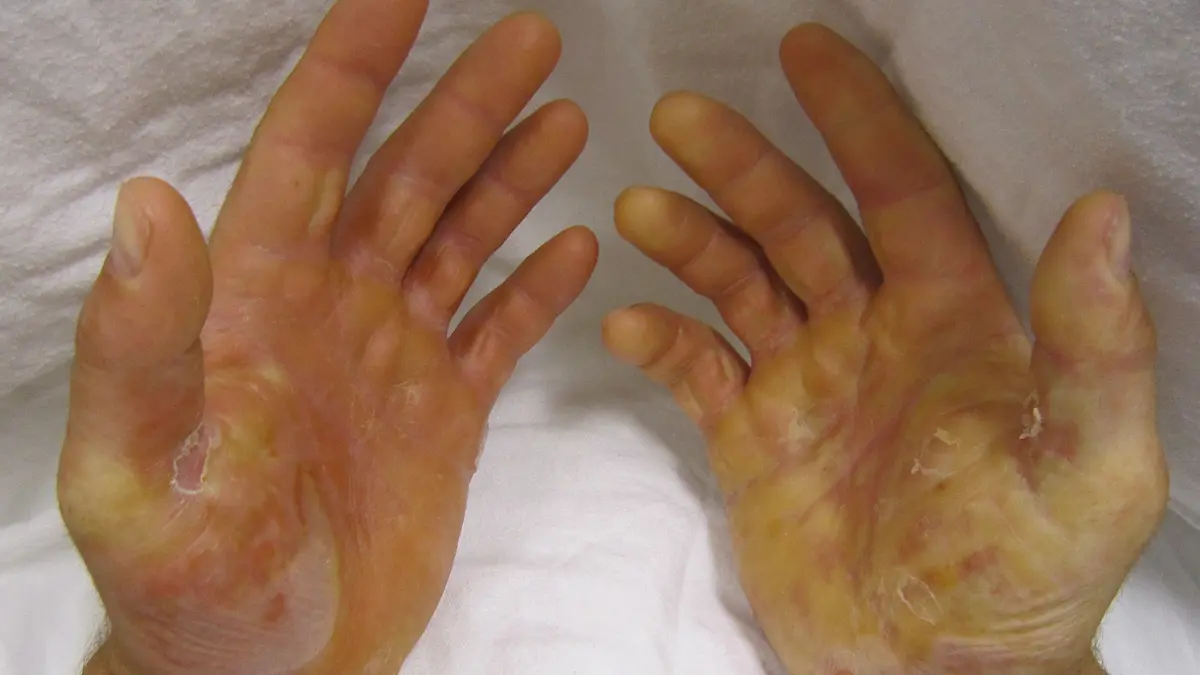
Epidermolysis bullosa is commonly shortened to EB. It describes a group of genetic skin-fragility disorders. Small amounts of friction can cause blisters and raw skin. Symptoms may begin at birth or appear later, depending on the subtype.
Skin layers normally hold together through specialised structural proteins. Genetic changes can weaken different parts of that system. At least eighteen genes are known to cause inherited EB. The location of tissue separation helps classify the disorder.
The four main groups are simplex, junctional, dystrophic and Kindler syndrome. Each contains several subtypes. Severity ranges from local blistering to widespread, life-threatening disease. Inheritance may be dominant or recessive.
Diagnosis and genetic testing
Clinical examination can suggest EB, but precise subtype matters. A skin biopsy can show where tissue separates and which protein is missing. Genetic testing can identify the responsible variant. Families may then receive more accurate counselling and prognosis.
Testing remains expensive or unavailable for many Indian families. Samples may need referral to a distant laboratory. Delayed classification can weaken treatment planning and genetic advice. A validated lower-cost method could reduce that barrier.
Genetic diversity also matters for test design. Panels created mainly from other populations may miss relevant variants. Indian evidence can improve interpretation and future screening. Results must still include counselling and strong privacy protection.
Daily health burden
Repeated blisters create painful wounds and infection risk. Dressings must protect skin without causing fresh injury. Heat, seams and ordinary movement can worsen friction. Families often perform complex wound care every day.
Some subtypes affect the mouth and food pipe. Eating may become painful, causing poor nutrition and anaemia. Scarring can join fingers or restrict joints. Teeth, eyes and airways may also require specialist care.
Severe recessive dystrophic EB carries a high risk of aggressive squamous cell carcinoma. That risk belongs especially to this subtype, not every person with EB. Regular skin examination is therefore essential for high-risk patients. New or changing wounds require prompt specialist review.
Current treatment
There is no single cure for all forms of EB. Care focuses on wounds, infection, pain and nutrition. Physiotherapy can preserve movement. Dentists, surgeons and mental-health professionals may also be needed.
New molecular, cell and gene therapies are developing for selected subtypes. Their suitability depends on the affected gene and clinical condition. Cost and specialist delivery can limit access. Evidence from one subtype cannot be assumed for another.
Drug repurposing examines medicines already used for other conditions. Existing safety knowledge can sometimes shorten early development. A repurposed medicine still needs evidence for EB. It should not be used merely because a laboratory mechanism appears promising.
Why an Indian programme matters
Rare disorders often receive fragmented care and little population data. Families may travel repeatedly between hospitals. A linked clinical and genomic programme can shorten that path. It can also train professionals beyond one centre.
Affordable diagnostics must be measured through real patient access. A lower laboratory price helps only when referral and counselling are available. The project should report turnaround time, confirmed diagnoses and treatment changes. Patient organisations can help shape meaningful outcomes.
A registry would support research, service planning and trial readiness. Participation should be voluntary and governed carefully. Identifiable genetic information needs strict protection. Families should know how their data may be used.
A group of disorders, not one identical disease
EB has many genetic causes and clinical forms. Diagnosis and treatment must therefore match the person’s confirmed subtype and needs.
Conclusion
The ADAPT-EB grant addresses a neglected gap in rare-disease care. Cheaper diagnosis could guide treatment and family counselling much earlier. Research claims must remain tied to validated clinical evidence. Privacy and patient participation should guide any registry or genomic programme. Success will mean accessible, coordinated care rather than a laboratory result alone.