

Why in news?
Health regulators renewed scrutiny of nitrosamines in medicines and processed foods. These compounds can form during production, storage or food preparation. Several members of the group can damage genetic material and cause cancer. However, their potency varies greatly with structure, dose and exposure.
Background
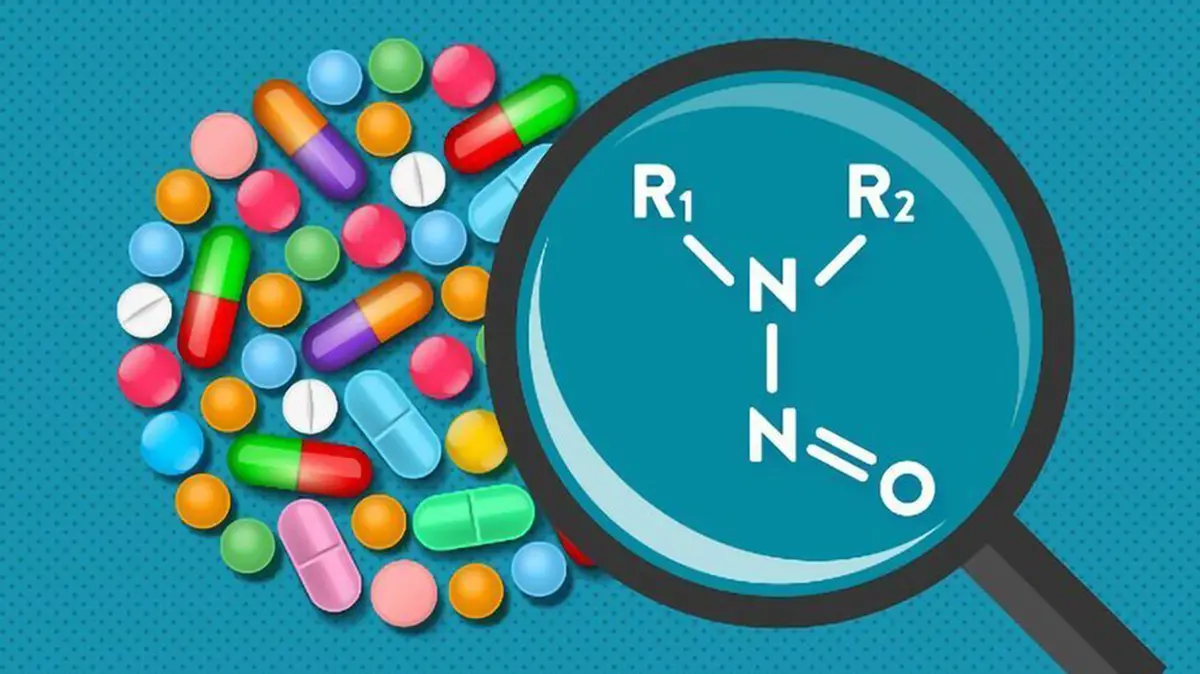
Nitrosamines are N-nitroso compounds containing a nitrogen–nitrogen bond and an oxygen atom. The family includes many different molecules rather than one single contaminant. Their toxic effects therefore cannot be described through one universal limit.
Formation generally needs a nitrosating agent and a suitable amine. Nitrite can produce reactive nitrosating species under acidic or heated conditions. These species may then react with secondary amines present in food or medicines.
People encounter low levels through food, drinking water, tobacco smoke and some workplaces. Nitrosamines can also form inside the stomach under favourable chemical conditions. The practical health question concerns the specific compound and total long-term exposure.
How food processing can create them
Nitrite salts help cure meat, control dangerous bacteria and preserve colour. They can nevertheless participate in nitrosamine formation when amines and favourable processing conditions coexist. High-temperature frying may increase formation in some cured products.
Smoked, grilled or heavily processed foods can contain variable amounts. Concentrations depend upon ingredients, temperature, acidity, storage and manufacturing controls. A food category alone cannot establish the dose received by any person.
Food regulation therefore combines limits, monitoring and improved processing, while manufacturers can reduce precursors, heat and vulnerable formulations. Antioxidants such as ascorbic acid can suppress some nitrosation reactions under controlled conditions.
Why medicines became a major concern
International attention increased during 2018 after certain valsartan medicines contained an unexpected nitrosamine. Subsequent investigations identified problems involving ranitidine, metformin and several other drug classes. Regulators ordered recalls where measured exposure exceeded product-specific safety limits.
Some impurities are small nitrosamine molecules introduced through raw materials or manufacturing chemistry. Others are nitrosamine drug substance-related impurities created from the medicine's own molecular fragments. These larger impurities can form during manufacture or later storage.
Residual nitrite in an inactive ingredient may react with an amine in the active substance. Packaging, temperature and shelf life can also affect products, so regulators examine the complete manufacturing and storage chain.
The United States Food and Drug Administration uses a carcinogenic potency categorisation approach for many newer impurities. Molecular features place an impurity into a potency category, which then supports a compound-specific acceptable daily intake.
Understanding acceptable intake
Acceptable intakes are deliberately very small because exposure can continue for years. Limits differ according to carcinogenic potency and available experimental evidence. A laboratory detection does not automatically mean the finished medicine is unsafe.
The regulator sets 96 nanograms daily for N-nitrosodimethylamine and 26.5 nanograms for N-nitrosodiethylamine. Other limits range from very low values to 1,500 nanograms daily. These numbers apply to daily exposure, not the concentration inside every tablet.
Regulatory calculations commonly assume continuous lifetime use. At or below the accepted limit, daily exposure for seventy years should not add a meaningful cancer risk. Temporary exposure above a limit requires product-specific evaluation rather than panic.
Risk management and public communication
Manufacturers must map possible formation routes, validate sensitive tests and redesign vulnerable processes. Regulators can request reformulation, shorter shelf life or batch withdrawal. Continued testing is especially important because impurities may increase during storage.
Patients should not stop prescribed treatment solely after reading about an impurity. Abrupt withdrawal may create a greater and immediate health risk. A doctor or pharmacist can explain whether a particular product has been affected.
Public reporting should distinguish detection from excessive exposure. Modern instruments can identify extraordinarily small quantities, including harmless traces below accepted limits. Transparent batch data and timely recalls remain essential for maintaining confidence.
Conclusion
Nitrosamines illustrate why chemical safety needs compound-specific evidence and lifetime exposure assessment. Effective control combines better manufacturing, careful food processing, reliable testing and proportionate communication.